Source Is Webflow's New Platform, Not Just Another Feature

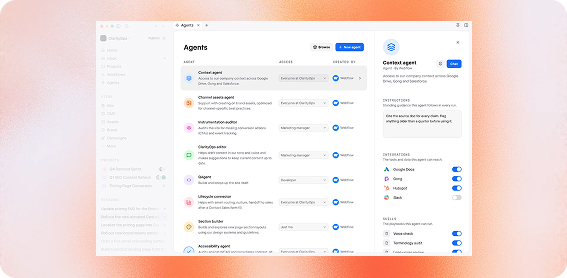
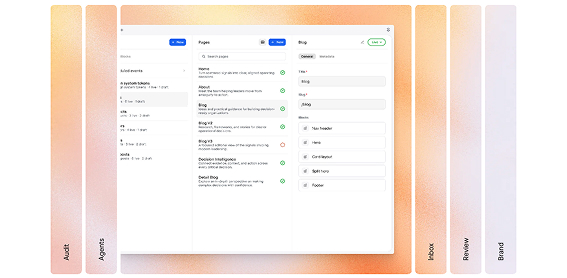
Source gives marketers, designers and developers a shared workspace with AI agents, built directly on code rather than Webflow's existing visual abstraction layer. Agents work faster when they can read and write the code that actually ships, and each team member gets a "View"; a workspace shaped around their job, whether that's campaign building, content, or optimisation.

It's a genuinely different product, not an incremental CMS update, and it's not out yet. Source is in limited research preview, rolling out to select agencies and customers over the coming months. Webflow has been explicit that your existing site isn't going anywhere and a supported migration path will exist when Source is ready and if you wish to migrate across. Alternatively you can stay on your current Webflow platform as they have with Webflow stating "we will continue to invest in our existing platform that teams use every day, including expanding its agentic capabilities."

What this means for you:

Nothing to act on today. Source is worth watching if you're weighing platforms for a 2027 rebuild, but it's not a reason to pause a project that's already moving. Treat any "should we wait for Source" conversation the way you'd treat any shiny new platform pitch: what does your team need to run day to day, not what looked good on a conference stage.


Where Agencies Stand to Gain

This is the part worth reading twice if you run one. Webflow was explicit that Source is meant to expand what agencies can take on, not just what marketers can self-serve.

Because Source works directly on real code and any stack, agencies can take on technical builds they'd currently decline or hand off to a specialist shop, without requiring the client to migrate onto Webflow's CMS first. A custom workspace built around how a specific client's team operates becomes a product: build it once, install it on every project that needs it, and bill it as differentiated work. And with clients already asking agencies to advise on AI transformation, Source gives that advice a platform to sit on, turning "we think you should adopt AI" into a proper, sellable service rather than a slide in a pitch deck.

What this means for you:

If you've been fielding AI questions from clients with nothing concrete to offer beyond opinion, this is the first sign of a platform built to back that conversation up. Worth a proper look once the research preview opens further, not worth chasing an early invite for its own sake.

Campaigns & Assets Promise Speed with a Catch

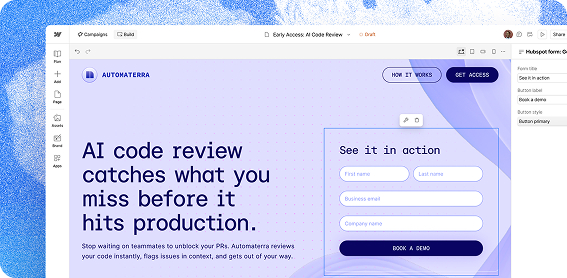
Campaigns takes a brief through to a live landing page, audience variants, and matched ad creative, pulling your existing brand colours and fonts from a live URL so it works even if your main site isn't on Webflow. It's in beta now and goes on sale next month.

Assets, built on technology acquired from Vidoso earlier this year, adapts approved brand assets across formats and channels rather than generating from scratch each time. It enters beta in October.

What this means for you:

Speed from brief to live campaign is real, but it was never the constraint that mattered most. Teams get value from tools like this when a genuinely governed brand system feeds the agent: locked components, approved copy, clear guardrails on what ships without sign-off. Without that, you're just generating more variants of things nobody's checked. Structure beats spend, and the same logic holds for structure versus automation.

Agents Get Deeper Access to Build and Ship

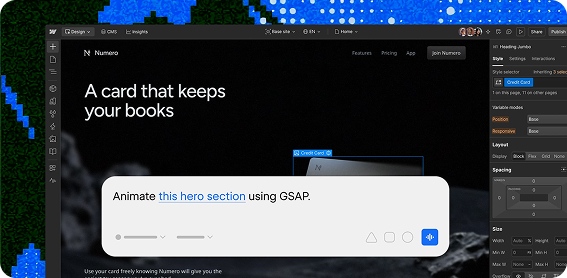
MCP 2.1 gives agents in Claude, ChatGPT and Slack deeper access to Webflow: GSAP-powered interaction building, better CMS querying across custom and reference fields, and visibility into Webflow Cloud deploy errors so an agent can work the fix directly. It rolls out to everyone later this month.

Two smaller updates are worth knowing about too. Releases lets teams branch an entire site (pages, CMS content, components, locales) and stage it before publishing. Webflow can now auto-generate the Agent Instructions files that govern agent behaviour, pulling brand guidelines and design system rules straight from what's already on your site instead of requiring someone to write them by hand.

What this means for you:

This is the update that matters most for anyone running Webflow day to day, agentic platform ambitions aside. Better CMS querying and auto-generated guardrails reduce real friction on real projects, and both are usable now rather than "coming soon."

AEO Starts With a Visibility Problem

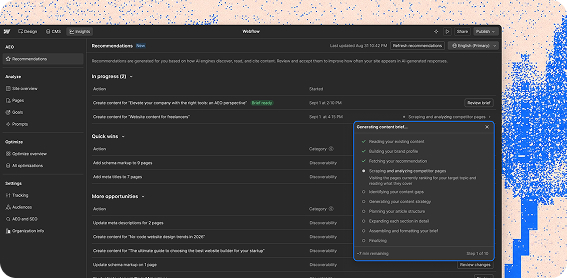
Webflow's own research found the median company appears in only 16% of the AI answers it would want to be part of, and gets cited in just 6% of those. That's the number that should land first: most brands are functionally invisible to buyers asking AI tools questions instead of typing search terms.

Webflow's pitch is that AEO customers now see 70% more mentions and 120% more citations than non-Webflow brands, based on an internal comparison of 158 customers who acted on AEO recommendations against 187 who received the same recommendations and didn't. Webflow said plainly that the figure doesn't isolate AEO from other factors like seasonality, so treat it as directional, not proof. New content agents can now find where competitors are getting cited and you aren't, then draft the fix straight into your CMS, though full AEO agent access currently sits behind Enterprise plans.

What this means for you:

The underlying point stands regardless of the exact multiplier or who gets the agents first. Structured data and clean CMS content are no longer just an SEO nicety; they're how an AI agent decides your business exists at all. That's groundwork worth doing now, on any platform, ahead of Webflow extending more of this beyond Enterprise later this year.

Prepare Now Rather Than Rush to Migrate

The right platform is the one your team and your operations can actually run, not the one that got the loudest applause on stage. Source looks like serious engineering and the agency opportunity is genuine, but a research preview is a research preview. If a vendor conversation this month leads with "you should move to Source," that's a conversation worth having slowly.

What is worth doing immediately:

  • Audit whether your CMS content is clean, structured, and ready for an agent to work with.
  • Check your structured data is accurate and complete, not an afterthought.
  • Make sure your brand guardrails are documented well enough for an agent, yours or a future Webflow one, to follow safely.

If you want to find out what's genuinely worth exploring for your business, check out our Webflow services or get in touch with our team. We'll talk you through where the opportunity is and where it isn't.